In Cameroon, the informal sector is the largest and most vibrant contributor to the economy. It provides essentials services and jobs. But, it also faces multiples challenges and opportunities. The recent Third Employment and Informal Sector Survey (EESI3) give an insight on this crucial sector. It gives trends, challenges, and potential future development. I have highlighted some key area in this article.
1. Structure of the Informal Sector
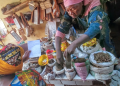
The informal sector in Cameroon is the most represented. It is primarily composed of small-scale units. They are also described as informal production units (UPIs). They operate for 36% in services and commerce for 35.2%. The industry comes last with 28.4%. It is important to note that women have an important role in this part of the economy. Good news: they lead with 56.1%. Not surprisingly, they work in spaces that lack professional facilities. The majority of the informal business is run from home and without any business premises.

Cameroon’s informal sector is marked by small, unregistered businesses, limited access to essential services, and high job vulnerability, especially for women and youth.
2. Employment and Worker Vulnerability
The informal sector gives employment to a large portion of the workforce in Cameroon, yet these jobs are very volatile because of the market instability. Moreover, salaried employment is low (5.8%). Adding to that, a staggering 85% of workers are self-employed or unpaid family members. Consequently, because of that, workers lack multiple things, like job security, benefits, and social protection. Most of the represented population are women and young people. All of them are put in vulnerable roles. This shows the need for better regulation and job stability and protection.

3. Income Disparities
The most important topic is the income. It varies very widely from one area to another. From the rural area to the rural one, the income varies a lot. In fact, the urban area workers earn more hourly on average than the rural ones. It is 675 FCFA in urban areas compared to 657 FCFA in rural areas. Also in industry, this difference is noticeable: In service workers earn 97,000 FCFA per month, while those in commerce and industry earn 90,800 FCFA and 60,800 FCFA, respectively. It is also sad to note that a large portion of workers earn way below the minimum wage. This is especially in industries such as agrofood, where 73.8% of employees make less than the mandated minimum wage.

4. Access to Basic Services
Most of the businesses face major issues accessing essential services. In fact, they lack basic infrastructure like water, which is 89.2%. Next is the lack of toilet 83.9% and 83.4% of phone line. Although urban areas have better infrastructure, power outages are still present. This hinders productivity and growth of potential for many enterprises.

5. Opportunities for Formalization
Many owners in the informal sector express the desire to formalize and do better. This would open opportunities for credits, growth, and government support. But barriers such as complex regularization processes and lack of financial support. This prevents them from taking further steps to regularize. A large portion of small businesses in the informal sector prefer a market-driven pricing model. But it would benefit from more accessible financing options and a structured support system. This would help them grow sustainably and move towards formalization.

Conclusion
The EESI3 report highlights both the resilience and vulnerability of Cameroon’s informal sector. Addressing infrastructure, income disparities, and paths to formalization could unlock new opportunities for growth and stability. By investing in this sector, Cameroon can enhance job security, income levels, and the quality of life for millions of informal workers. Moreover, it will be challenging for an investor to just come and work with the locals. But it shows that there are opportunities to invest to build better skills and transfer the knowledge.